Author’s Advice pt. 14

Choosing to write characters that you hate into your story is a very bad idea.

In a previous posting I talked about how you have to step outside of your comfort zone and often write a character that has views contrary to your own. Indeed this is a very good way of creating relate-able characters and keeping a dynamic story line going. However, that doesn’t mean you have to write a character that you don’t like.

Think about it, most everyone out there has friends with viewpoints that differ from their own. You don’t dislike that person for their views, you simply disagree with them. Well it’s the same thing when creating a character, you can create a character with views that you don’t agree with, without despising that character.

A lot of my readers have commented on how they can’t stand it when people write characters that they hate or at the very least don’t care about and continuously put them through unspeakable horrors that no one would realistically make it through unscathed, if at all. Given the amount of comments I got on this, I felt that a post dealing with this topic was inevitable, so thank you!

I myself have been guilty of this in the past. One of my early stories featured a villain that was based on a guy I went to college with. He was someone who was a few years older than me, completely paranoid about anyone who spoke to his girlfriend, and had one too many character flaws that were just intolerable. I locked horns with this person too many times and really came to absolutely despise them. So, like many other writers, I thought the traits he possessed, his character flaws, and outright disdain was perfect for a villain.

I was wrong…

Every time I wrote, I pictured his face and it made my blood boil. The result was a dark and bitter story that not even the most manic-depressive teenager would enjoy. I read through it once and immediately tore it up. That’s not how I wanted to write, not at all. I knew I was better than that.

The worst part is that the people who write this way and don’t realize what they’re doing, don’t seem to understand that their readers pick up on this kind of thing. Readers are very good about detecting when someone is writing with disdain and it doesn’t leave a good impression. I’ve known people who stopped reading stories because of things like this.

The inherent problems with this method of writing are as follows…

1. The writer doesn’t care about this character and tends to not give them much of a back story, making the character stale and uninteresting.

2. The amount of pain and suffering that a writer puts that character through usually hints at a very misanthropic attitude, whether that’s accurate or not, that’s how it comes off.

3. The character is unrealistic. Though I hate to make this reference, go watch IT, and keep a very close eye on the character Henry Bowers.

I know in the book he’s probably given more explanation and that’s fine, but if you’ve read it, try to look at the movie objectively like you haven’t. There is no development of this character, he’s a one-dimensional villain who sees murder and terror as the only option… why? Is there someone like this that King himself had to deal with growing up? I don’t know….

Many believe that this is the best way to write a villain or a character who won’t survive long, and I can’t say that I agree at all. In fact, one of the best villains I ever wrote about, I based on another college friend of mine, though I would NEVER admit this to her. This person was the type of individual who cared more about the people around them, than their own well-being. They would have given you the shirt of their back for the asking. I thought about it and when the gears were turning, I thought to myself, ‘How awesome would it be to make this character one of the villains? No one would see it coming!’

So I went ahead with it. People like this character, it was someone who just kind of fell in with the group due to circumstances, but quickly became one of them. Even my wife gravitated towards this character. So you can imagine that absolute shock when I revealed that this character was not only not on their side, but had been responsible for most of their problems. They had their reasons, but it didn’t change the fact that they were not on the side of the moral right throughout the story.

THAT is how you write a great and dynamic character. If you write a character with loving care and are truly excited about the impact the character will have, your audience will pick up on it and love that character. It is pretty much the exact opposite of an unfortunately growing trend among writers, especially those who write young adult fiction.

Just keep that in mind the next time you sit down to create a new character.
Thanks friends, catch you on the flip side,

Jim

Author’s Advice Pt. 13

Don’t let writing consume your life.

So you’re writing, you have a great idea and you want to get the whole thing down while it’s fresh in your mind. It’s perfect and if you don’t write it down right now, you’ll lose it. I get it, I’ve been there. There is certainly nothing wrong with taking that moment to get that info down, but the problem with great ideas like your initial one is that they tend to branch.

Soon one awesome idea becomes 3 awesome ideas and then those also branch out into 4 or 5 of their own. The next thing you know, you’ve blown through several hours. Your partner is yelling at you because you haven’t done your chores or paid attention to them. You’ve neglected your responsibilities, even though you didn’t mean to.

It happens, and it’s a difficult habit to break. What’s even more difficult is learning to pull yourself away and say ‘enough is enough.’ I know it may seem like that one great idea is the be all, end all, and you’ll never think of anything that great again… but you will. The fact is that some of the best writing I’ve done is when I passed up seemingly great ideas and then came up with even better ones. Creative juices do not stop flowing. They may ebb, or even slow to a trickle, but they never stop. You’ll get that rush again, and before long, you’ll be steaming out another few chapters.

Remember, when in doubt, the book can wait. Your characters are fictional, off living their own lives, or dead (depending on fiction or non-fiction), so it doesn’t matter if you get everything down today or tomorrow. What does matter are the people right in front of you wanting to spend time with you. It may mean that you will take a lot longer to finish your book, but in the end it really is the better way.

Oh, and for those of you who will respond that your writing is your life…

PUT YOUR PEN OR COMPUTER DOWN, NOW!!! Put it down, go outside and go do something, anything else. Meet up with friends, go on a date, or if you have a family, take them out somewhere. Stay away from writing at least for a little while. You’ll be better off, believe me.

Thanks friends, catch you on the flip side,
Jim

+

Fantasy Art, Chrissie Zullo

I know that this is slightly off-top for me, but I really couldn’t resist…

Let me preface this by saying that I love comic book art. I have original pieces from Alex Savuik, Pop Mhan, and Zeke Savory Jr. I’d just like to say that whomever came up with the idea to print blank cover variants of popular books is a genius!

So as most of you know, when I write about elves, I use my Skyrim companion as the example image:

2014-04-28_00001

Well, my local comic book store was having an event where a couple of known (and talented) artists were going to come, sign autographs, sell prints, and if you got there early enough, do commission pieces. I’ve been a fan of one of the artists, Chrissie Zullo, for some time. Her work in the Fables series has been nothing short of extraordinary. I’d tried to buy an original piece from her in the past, but always got to her online store two seconds too late (wish I knew how some of these people do this!!!!). So I was determined to have her do one for me.

In all her wisdom, my wife told me that I’d better get up their early and be ready. To my wife’s credit, she was right. I came back later and overheard Chrissie turn down another piece, presumably because she didn’t have time. (She was only at the store for a few hours)

So I went up to the store and that’s when I saw the blank cover variant of Batgirl. I knew she’d done a few Batgirl pieces in the past and frankly, they were my favorite of her work. So I figured, what the heck, I’d try it out. Most of the time, I’d just have the artist use a sketch pad, but I thought this would be more interesting.

There was one person already there ahead of me. He also wanted artwork done. So I waited and then it was my turn. I asked her if she could do the pic like she had done of batgirl, but then I stopped, did I want the same thing? Just a copy of the image she had already done and sold? I like one-of-a-kind stuff… so that wouldn’t be cool, but what character would I like?

Well the guy before me had given her a character that she didn’t know, so he brought it up on his phone and took a picture of it. That’s when the idea popped into my head, what about my Skyrim companion? I had a picture of her on my phone and it would be awesome to see her done.

So I asked, and Chrissie was more than up to the challenge. She took a picture of it and said that she preferred doing original stuff anyway. So she took the comic, though she warned me that two characters might be a little crammed, but I said that whatever she could do would be fine.

Well… the work speaks for itself…

WONDERCON UPDATE: VOLUME THREE COPIES

Hey all, be sure to check out this new and exciting book by a talented author!!

Going Against Your Beliefs.

So is it possible to ethically write characters or circumstances that go against your personal beliefs, code of honor, and/or standards?

It’s not an easy thing to do, for sure, but to a point, I’d say yes. Allow me to provide an example:

In college, I took classes dealing with European Socialism and Fascism. In one of the classes, we were asked to recreate the Nuremberg Trials. I was asked to play one of the defense attorneys in the debate and to come up with a viable defense for the Nazis that I would be representing.

My grandfather fought in WW2 and helped liberate one of the German labor camps. It was something he refused to talk much about, if at all. So coming up with a defense for people who committed such monstrous acts was… well… I wasn’t entirely comfortable with it. However, I sucked it up, because I wanted a good grade and frankly, I found the subject interesting. I wanted to see how it would play out.

However, I told the professor that under no circumstances would I use Holocaust denial as a defense. In my mind, that was going too far. She thankfully understood.

In writing, I’ve done the same thing. I’ve created characters in my stories that don’t share my views, and I haven’t always made them bad guys either. Going against your beliefs is uncomfortable, admittedly, but it also makes you think outside the box and embrace other thought processes in order to create a realistic perspective. Do you want to understand why/how someone could allow other people to suffer like they did in the 1940s? Do you want to understand how such evil occurs?

Well as someone who has tried to understand it and done heavy research into the whole mess that was WW2, I can honestly say that you’re not going to get very far unless you try to look at things from the perspective of the people who committed such evils. You have to get into their background, get into their mind frame, and understand what brought them to that point where something like mass murder was okay. I’m not saying come up with excuses for such deplorable and disgusting actions, but simply to take a look at things from the other side.

This analogy is, in my mind, how you create a perfect villain. When writing the bad guy, put yourself in his shoes. How does he react to outside stimulus, what brought him to where he is? Does he have any mental deficiencies? Could he have been good had just a few set of circumstances happened differently? Nature vs. Nurture.

But I’m getting off track…

So to put it simply, unless you plan on writing a very linear story, going against your beliefs and thinking outside the box is not only possible… it’s actually essential in many cases. Don’t be afraid to try it, and feel free to leave comments below discussing how you feel about such things.

Thanks Friends,
Catch you on the flip side,

Jim

Author Advice Pt. 12

So… one thing I’ve always struggled with is how long each chapter should be. A few paragraphs, a few pages, what?

The definition from Webster:

Full Definition of CHAPTER

1

a :  a main division of a book

b :  something resembling a chapter in being a significant specified unit <a new chapter in my life>

2

a :  a regular meeting of the canons of a cathedral or collegiate church or of the members of a religious house

b :  the body of canons of a cathedral or collegiate church

3
:  a local branch of an organization
Wonderful… well that’s helpful… So how do we gauge how long a chapter should be? Well for starters, I’d honestly say if your chapter is less than a page long, it’s too short.
Chapters seem to be relative to the overall length of the book; longer books, longer chapters. So a book that has only 80k-90k words could understandably have chapters that are 2-3 pages long. Whereas books that are over 200k could feasibly have 10-20 pages between chapters.
So with that established, when then do we start a new chapter or just use a marker to show that we’re switching locations or passing time?
Honestly… there is no set rule, but I try to stick to my self-imposed criteria:
Minor passage of time (hours): Time Marker
Change of perspective (moving to different characters): Time Marker
Significant time passage (1 or more days), but remaining in the same place or situation: Time marker.
Major Event: Chapter
Significant Time Passage, Change of Perspective: Chapter
Any passage of time/Change of Perspective following a change of location or circumstance: Chapter
Again, remember, these are my own self-imposed rules, so don’t worry if this isn’t how you do it. I post this simply as a guide to help anyone stuck on whether or not they should start a new chapter. Hope this helps!
Thanks Friends,
Catch you on the flip side,
Jim

MORE Inspiration…

So I’m up and writing again, and my thanks partially lies with this recently discovered (by me) song by a band I’ve been growing more and more fond of over time.

My Utopia by Van Canto. This is basically an A Capella group singing metal music. This song, especially the chorus line…

Fly…
To the morning skies
With armies of the true believers.
Try…
Try another time
by breathing hope.
Ride…
Through the waste of time.
Be yourself a pain reliever.
Fight…
Multiply the light
and space will grow.

It’s honestly not so much the lyrics as the melody. The mood and the up-tempo tune are pretty much everything I’m looking for in inspirational music.
Enjoy, and for those of you suffering writers block, I invite you to listen to this song, close your eyes when the chorus line comes on, and start brainstorming. You never know what you might come up with. It worked for me!

Thanks friends, catch you on the flip side,

Jim.

+

Author’s Advice Pt. 11

Don’t be afraid to mix and merge.

So you have a fairly successful series going, but now you’re experiencing writers block. You have fragments of two or three sequels written, but don’t know where to take them. You’ve even considered starting on a third, but haven’t gotten anywhere with it. You really like the first two and would love to continue one of them, but each time you get a line in, you stall and don’t know where to go. You wind up stopping for a week, only to come back and repeat the cycle.

Well…

Why not take those fragments, as well as your ideas for a third story and combine them? Take the central themes of one, the characters from another, and the story line from the third idea you have, or any combination as such. It may work, it may not, but I’ve observed it working very well for people many times over.

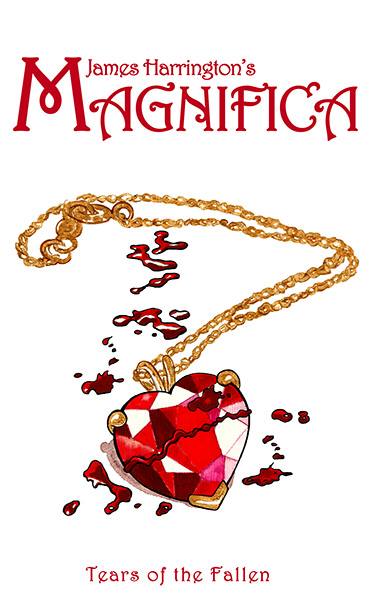
A good example is my book, Magnifica: Gravestalker. I combined a few sequels to create this story as I had sort of written myself into a corner, and my audience was somewhat… upset… with the ending to Magnifica: Tears of the Fallen.

I knew that I had to do something, but I didn’t know what. Gravestalker was a product of the above formula.

The Traitorous Main Character

So you’ve written your story. Your characters are beloved, not only to you, but also your reading audience. Well now you’re writing the next part in your series and are ready to do the unthinkable…

You’re going to have one of the characters turn on the others. One of your main good guys is now to become a villain and not just a villain, but one who was the cause of much of the turmoil that the other characters have gone through.

So how do you do it? Up until now, this character has been close to all of the others. They have become well-liked, and your audience has grown attached to that character. How do you suddenly make them the object of scorn?
Well it may not be as difficult as you think and it may not even be necessary. Let me explain…

If you’re going to paint the person as a straight villain, the shock and surprise alone should be enough to turn your readers against the character. If you’ve written it right, your readers should feel just as betrayed as the characters that they are reading about. Having the ability to make your readers relate, and even feel the same emotions that the characters are is a staple of a truly gifted story teller. Just make sure that you provide an alternate view of the events from the past stories so that everything fits into place. This is absolutely essential if the villain role is going to stick.

Above, I said that it may not be necessary to make the traitor the object of scorn. Indeed it isn’t. If you refer back to my Character Complexes thread, you can read up on how to create a villain that may not necessary be evil. Maybe this traitor has family that they are looking for, maybe they’re turning on their friends for what they perceive to be the greater good, or maybe there is a payoff at the end that is enough for the traitor to sacrifice their friends.
The point is, just because the character is no longer a good guy, or on the same side as the main characters, doesn’t mean that they’re bad. Quite the opposite, it just means that their circumstances have changed. That character can still be relateable and even likable.

Now, does that mean that this character won’t come back to the morally ‘right’ in the story? No, there is no rule in place that a character can’t switch sides.

So just remember when writing a traitor, it may be better and even easier at some points to not paint them as a straight villain.

Thanks and catch you all on the flip-side,

Jim

+

A Legend Leaves Us…

Today we bid farewell to a man who has touched the lives of many.

I usually don’t write posts like this, but as a huge fan of Star Trek and someone who grew up watching Leonard Nimoy… I felt I had to pay my respects…

I remember that I was about 4 or 5 the first time that I saw Mr. Nimoy on Star Trek. My dad and I were watching Wrath of Khan for the first time. By then, I was already a Star Trek fan and when I first saw this, I remember my reaction… ‘Dad, this isn’t Star Trek! Where is Captain Picard and Commander Data?’

Yeah my introduction to Star Trek was via the Next Generation. So seeing another cast take center stage was not something that I was prepared for, even less so to find out that they came first. I immediately connected with Spock and, like so many children before me, he was my favorite character… so you can imagine how traumatized I was an hour later when he got killed off.

Thankfully, my parents were quick to get me a copy of The Search for Spock, so that I could see that he wasn’t permanently gone. From then on, I was hooked. For years, when I needed a good adventure, or just something I enjoyed, Star Trek was always my fall back.

It takes a certain actor to bring a character with no emotion to the screen and make him dynamic. I can honestly say that if anyone else played him… the character would not have been anywhere near as likable.

Mr. Nimoy, thank you… thank you for years of underhanded comments to Dr. McCoy, thank you for years of enjoyment and entertainment. Thank you very much! Rest in peace, sir.

Author’s Advice Pt. 10

It’s NEVER too late to start over.

Are you working on a piece you’ve just lost all love for? Are you writing something that you really didn’t want to write in the first place? Do you really not care whether your newest piece get’s done or not?

If you answered yes to any of the above questions, STOP! Close out of what your writing and hit the delete key, or tear the paper up. It may hurt at first and you may see it as time wasted, but it’s better than completing a project you really don’t feel enthusiastic about. Often it’s best to just admit defeat and start over.

I know it’s hard, but don’t look at it as time wasted, look at it as you just discovered one way to write the story that won’t work. So now you know not to go down that road again. Nothing a person creates with their own two hands is ever a waste of time, remember that.

Free Exchange of Ideas…

Can I just ask… what the heck happened?

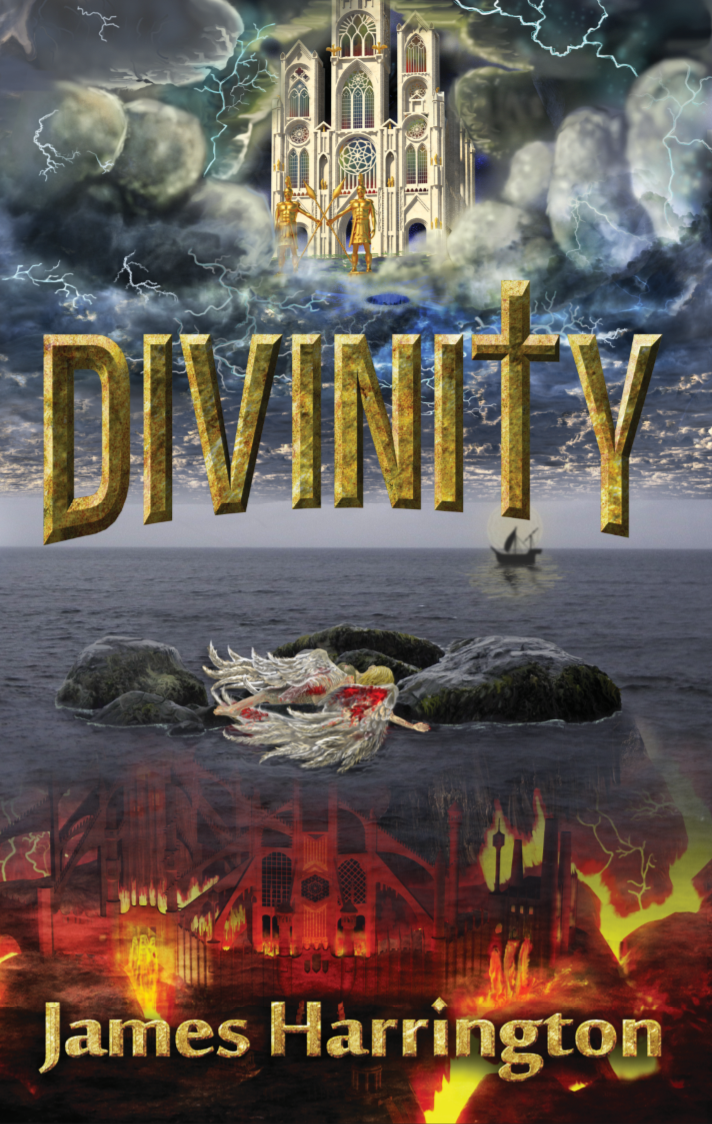
When I first published my work, I got a lot of comments from readers, both positive and negative. Divinity in particular got positive and negative comments from die-hard Christians and atheists, and I don’t understand the negativity.

I certainly can’t speak for the rest of the world, so if it’s different outside of the U.S. PLEASE let me know.

I don’t mind disagreeing with my views, in fact, I welcome it! I love it when someone posts a comment on Facebook, here, or on my other pages and tells me that they disagree with my message or my assessment of a certain situation or event. I always enjoy hearing about it from the other person’s perspective and then engaging their talking points. That’s fine…

What’s not fine is when people start calling you names or accuse you of racial bigotry. I don’t get that. Nowhere have I ever used racial slurs in anything I’ve written (unless you count sharpy, which many of my characters call elves), nor have I ever said anything about a specific ethnicity or religion that would portray everyone in any of those groups in a negative light.

I’ll provide a perfect example. The other day I was on a newspaper’s website and one person mentioned on the message board that he supported voter ID laws. The next comment accused him of being racist. How is requiring all citizens to prove their citizens racist? Another comment said that it makes it more difficult for poor people to vote. That is a credible argument, but racist? Is the person making that comment inferring that all poor people are minorities, or that the majority of certain minorities are poor? Isn’t the assumption of racism, actually racism itself?

Anyway, I don’t want to delve into a conversation of semantics, so let me get back on point. Why just sit there, yell and scream, and accuse the person of being racist? Why get mad at that person’s viewpoint? What good does that do? Why not instead of resorting to anger, threats, or childish name-calling, you address that person’s talking points. Tell that person why you think they’re wrong and then hear their arguments. You might learn something and they might actually gain some knowledge in the process too. Why is that not a better solution?

By resorting to childish name-calling, you make yourself look less intelligent.

By resorting to misogyny, you make yourself out to look hateful.

By resorting to inserting race or ethnicity into an argument, you make yourself out to be hateful, you water-down justified accusations of racism, and you spit on everyone who actually suffered from racism and fought for equal rights.

All of this takes a negative toll on society. It get’s to the point where Freedom of Expression and Speech take a back seat to people’s’ sensitivity. The problem is that people don’t see the damage being done by this. Someone showing a different perspective on things, as long as it’s factual and historically accurate, should not be met with scorn. Their talking points should be addressed.

Seriously, why get mad? Why break off contact or remove someone from your contact list? Why resort to stupidity? If someone’s opinion truly upsets you, ignore it. Unless they’re specifically saying it to insult you or a group you’re apart of, why get mad? Why not respond and tell them why you think they’re wrong?

All you’re doing is making it more difficult for someone to express their opinions or their views. By accusing someone who expresses a viewpoint of racial, religious, or ethnic bigotry where none was intended or implied, or calling them names, all you’re doing is making another person fear how they’re going to be portrayed by others, including their employers and family, and thus are making it harder for them to put their views to paper, and that’s a terrible, awful thing to do, when the Free Exchange of Ideas is one of the most important freedoms anyone has.

I really don’t want to spend too much time on this, so I’m going to close with a quote from a TV show I loved as a child:

With the first link, the chain is forged. The first speech censured, first thought forbidden, the first freedom denied, chains us all irrevocably… The first time any man’s freedom is trodden on, we’re all damaged. 

P.S. Don’t be afraid to post if you think I missed something or disagree, as I said above, I welcome other viewpoints and would love to address them.