Friday Fantasy ~ Fortune’s Favor

Beautiful poetry by a skilled writer!

Dorinda Duclos's avatarNight Owl Poetry - Dorinda Duclos

fortune teller

Mystical winds blow
A Mystery unfolds
Held in my hands
Fate hidden, untold

Conjuring Spirits
Bound, Beholden
Your Future unravels
Resplendent, Golden

A Crystal globe Shines
With Sun’s Magic Spell
Revenant, Fortune’s Favor
Enchantingly dwells

©2014 Dorinda Duclos All Rights Reserved

Photo via wallpaperup.com. Original artist credited there.

View original post

The End

This won’t necessarily focus on one story, or even one series. It will more focus on serials and how the ending are handled. So let’s get to it, shall we?

Everyone loves a good ending, everyone. But what makes a good ending and what makes a bad one? Is a good ending the fairy tale happy ending where the hero gets the girl and rides off into the sunset? Or the ending the ties up all the loose ends? Not necessarily.

In this day and age, a lot of people will tell you that a dark ending is often more preferable to the fairy tale ending. Take… the butterfly effect for example:
http://www.youtube.com/watch?v=OqKWxAmOLaM&feature=related
This ending where Ashton Kutcher kills himself is the original ending to the story. At the last minute, the director cut this ending in favor of a lighter ending, thus making the theatrical version unwatchable as opposed to just a really bad movie. So in this case, a darker ending would have been preferable.

Another example of a good ending that doesn’t necessarily fit into the mold is from a movie I consider legendary: “No Country For Old Men.”
http://www.youtube.com/watch?v=C-iQldPiH64
This ending was powerful because it leaves you hanging. Did the bad guy finally redeem himself and show mercy, or did he kill her? We’ll never know. It’s the questions that this movie left wide open that makes this ending good, and this is one of the few movies that can actually pull off an open ending without the promise of a sequel.

So while the cookie cutter ending works, in the right circumstances, so does the ones that are outside the box.
So let’s move into the realm of the serial movie. Over the last few years, we’ve seen the rise and fall of 3-7+ part movies. These include Lord of the Rings, Star Wars, Twilight, Harry Potter, Star Trek, and even Pirates of the Caribbean to a lesser extent.

So in the multi-part movies, which ones got their endings right and which ones did not?
Probably the biggest crime in movie making is leaving an open ending when you know there will not be a sequel. Unfortunately one of the best examples of this kind of travesty is Star Trek: Nemisis.

So this movie ends with Data dying and… possibly being reborn in his more primitive ‘brother.’ You see Riker and Troi going off onto their own ship, and in a cut scene, Dr. Crusher was leaving to work at Starfleet Medical. The entire thing cuts out with the Enterprise E in dry dock getting rebuilt after it’s fight with the Scimitar.  So why is this ending so bad?
Maybe I’m nitpicking here, but the movie left too much open. The ‘new’ Data plot, plus who wasn’t curious whether or not Worf stays with Starfleet or joins the Klingon Empire with Martok, what about Geordi LaForge, he’s still there!
Just because you pull two crewmen off the ship, doesn’t mean the show is over. Star Trek 6 pulled Sulu and Rand off the Enterprise and put them on the Excelsior, and it’s still one of the best Star Trek movies out there. So there could be a sequel with Riker and Troi on the Titan. I guess my major problem is that you knew the TNG crew was getting up there and this was likely to be their last movie, so you expected more of a solid ending. Star Trek 6 had the Enterprise being decommissioned and Sulu going off on his own missions. This was a solid ending.
Nemisis, in my opinion, would have been a much more solid film had they come to Picard and told him that the Enterprise was too damaged to be refit, retired her, given Picard a promotion, and broken up the crew. That would have made sense.

Another rather famous disaster is one that is actually more tragic… mostly because they got it perfect the first time, AND THEN ROYALLY MESSED IT UP!!!
Star Wars: Return of the Jedi. In all my days I have never seen one minor alteration mess up the ending for an entire series. Let’s explore it shall we?
http://www.youtube.com/watch?v=ALEnOpzqFpk
This ending, the original featured Sebastian Shaw playing Anakin Skywalker (Luke’s father). Note the look in the man’s eyes. It’s bittersweet. He is clearly happy to see his children together, alive, well, and happy, but at the same time, you see the sadness in his eyes. Sadness caused by the time he never got to spend with them. This, to me, is unbelievably powerful. It shows that Luke successfully saved his father, but it also shows the humanity that returned when Anakin became his former self.
Now let’s look at the… remastered version…
http://www.youtube.com/watch?v=SFvFjrb2jMI
Ugh… no emotion, no regret for lives lost, or the time he didn’t get to spend with his children. Just more of Hayden Christiansen’s bad acting. This is why I own a copy of the original and refuse to recognize this as anything more than a fan-dub ending from an idiot with too much time on his hands.

So now that we’ve established what doesn’t work, let’s move on to what does… Lord of the Rings. I could devote a whole post to analyzing the ending(s) to this movie BECAUSE THERE WERE LIKE 12 OF THEM!!! I would have preferred it if the movie had either ended with Frodo and Sam on the side of the Mountain, or with Frodo and Gandalf sailing away on the ship. Sadly neither was the case. I can’t really bash this movie too bad because they did literally tie up all the loose ends in the series. So I will give them a pass for over-extending the endings.

Another series that I feel does this really well is Pirates of the Caribbean… I am of course ignoring the second movie and going for the 1st, 3rd, and 4th.
I love the Episodic nature of these movies. Each is an individual story line that gets completely tied up at the end of the movie so you think there won’t be a sequel, BUT HEY! Right there, after the credits, there is a new plot point where a sequel could pop up, if not, well it was a good thrill to see a little extra.

So now we reach the bottom of the barrel. I take back what I said earlier about what the worst crime in a movie ending is, because movies like Dungeons and Dragons commits an even bigger crime: They push an ending saying that there is going to be a sequel. Thus leaving everything open. I have two major issues with this:

1. You’re assuming your audience will love the movie enough to justify a sequel.

2. You’re focusing more on profits then making a good movie!

Case and point, D&D flopped and the movie had no sequel… Thus the ending only made a bad movie worse and gave the audience the finger. Perhaps if the crew were focused on the story opposed to the dollar signs, they would have come up with a better script, plot, cast… okay I’ll stop.

So I guess in the end, the only good ending is the ending that either, surprises you, satisfies your questions, or really makes you think.

Proof Copy

Please be sure to check out this awesome looking story. Can’t wait for it to be released!

+

Why do books not always translate well to movies?

It’s not always the easiest question to answer. A lot of things go into making the jump from the written word to the big screen. Sometimes it works well, sometimes it doesn’t. Some stories weren’t ever meant to be turned into movies while others seem like they were made for it. Let’s explore some of the reason why a book may not translate well:

1. Scripting issues.
Contrary to some ill-informed beliefs, you can’t just have someone read from the book. You can’t. As a result, a writer has to sit down and turn the book into a playwright that can be acted out. Most often, it’s not the author of the original book that does this and it’s usually not just one writer. As with all things, one writer’s creative interpretations are usually quite different from another’s. This will result in the writer’s ‘interpretation’ through dramatic license of how they think the author’s story is supposed to go.

-A second problem is that while a script may have been sold, it’s not necessarily finished and more writers need to be called in finish the job, more writers mean more interpretations. Sometimes for the better… sometimes not…

-Another problem is a director, whose vision differs from that of the writer. In the end he has the final say and script rewrites can happen here at the director’s behest.

2. Studio Interference.
So you have your story, it’s great, people love it, and it’s well-known. So then you sell the rights to make it into a movie. Congrats, you’re rolling in dough… but now the studio takes over control of the story and the work begins to make it more fitting for the screen. Now some of these changes are obvious and necessary, such as cutting scenes to keep with a shortened run time or perhaps turning large blocks of dialogue into a more visual medium. This is to be expected with every story that makes its way to the big screen.
Books are taken through a lot of dialogue, that’s the medium, but movies are a visual medium and people want to see, they don’t want things described to them.
However… these changes are not always positive and some times they degenerate into a rather blatant form of meddling, adding more sex appeal to characters, perhaps adding in a comic relief character that wasn’t in the book or was a much less important character. Finally, product placement and merchandising comes into play. Once everything is done… the story can way too easily become unrecognizable from the original work.

3. Author interference.
In many cases, when we’re dealing with a more well-known author, extra steps have to be taken in order to get the rights to their books. The writers may make certain demands that the studios will have to work around. They also may often want to appease the author afterwards as there is no greater death sentence to a movie than a poor review from the person who wrote the original story.

This is one area that I’d caution about. If your film does get looked at to be turned into a play or a movie, be careful! Is the money you’re being offered worth having your story cannibalized? Most would say yes, but just make sure what you’re getting into, make sure that you can have your name pulled if you don’t like it, and make sure to have a lawyer read over the contract and negotiate things that you don’t want changed. Otherwise… you end up like these people…

Michael Ende:
This is one of my most beloved movies from my childhood. Imagine my surprise when I found out that the theme of the movie is actually ass-backwards from that of the book it was based on. It turns out that the book was condemning people who get lost in a fantasy world whereas the movie promoted the idea, saying that people no longer dreamed and thus were destroying themselves.
Ende absolutely loathed The NeverEnding Story to the point that he did everything he could until his dying day to destroy the movie. Apparently, the producers of the film hired other writers to do the above-mentioned edits to Ende’s script… completely neglecting to tell him anything about it. Ende was furious when he found out, but because the studio already owned the rights, he was largely ignored.
Ende was so angry that he had his name removed from the movie and proceeded to throw a multi-decade temper tantrum in the form of lawsuit after lawsuit. Ironically as the movie franchise became little more than a $1.99 at the gas station movie bin filler, starring Hollywood nuisance, Jack Black, by the time the 3rd movie came out, makes Ende’s anger seem… almost understandable.

P.L. Travers
I have never heard of anyone hating the movie that was based on their story more than her! She actually hated Walt Disney’s Mary Poppins more than I did!
By no means did she want her beloved story made into a movie and didn’t want Walt Disney’s… tackiness anywhere near it. Walt wouldn’t acquire the rights to MP for nearly 2 decades. It wasn’t until she fell on financial hardship that she finally surrendered the rights. Even so, she fought hard against the movie in almost every aspect. She hated the animated penguins, the senseless made up words, Julie Andrews and Dick Van Dyke, even the color red was objected to. Rumor has it she was also deeply offended by Dick Van Dyke’s accent!
After seeing the finished product, she was so distraught that she went to tear Disney a new one, but there was nothing she could do.
As she began to get on in years, Travers gave her consent for a stage version of Mary Poppins under the very strict condition that absolutely no one who worked on the Disney film could be involved in any way, shape of form. Furthermore, she wanted  only British writers to be hired to write it.
Rumor has it that she went so far as to attack Walt Disney in her will. Making her hatred of the film known one last time… eesh.

So clearly you can see what happens when studios go out of control. So before parting with the rights over your intellectual work in any way shape or form, please know what you may be getting yourself into!

Musical Inspiration: Amaranthe

This is another band that I absolutely love. It’s basically two different music forms combined into one. The mesh of styles, what I call Fusion Metal, really aids in my writing. I highly recommend these guys to anyone who finds their inspiration through music.

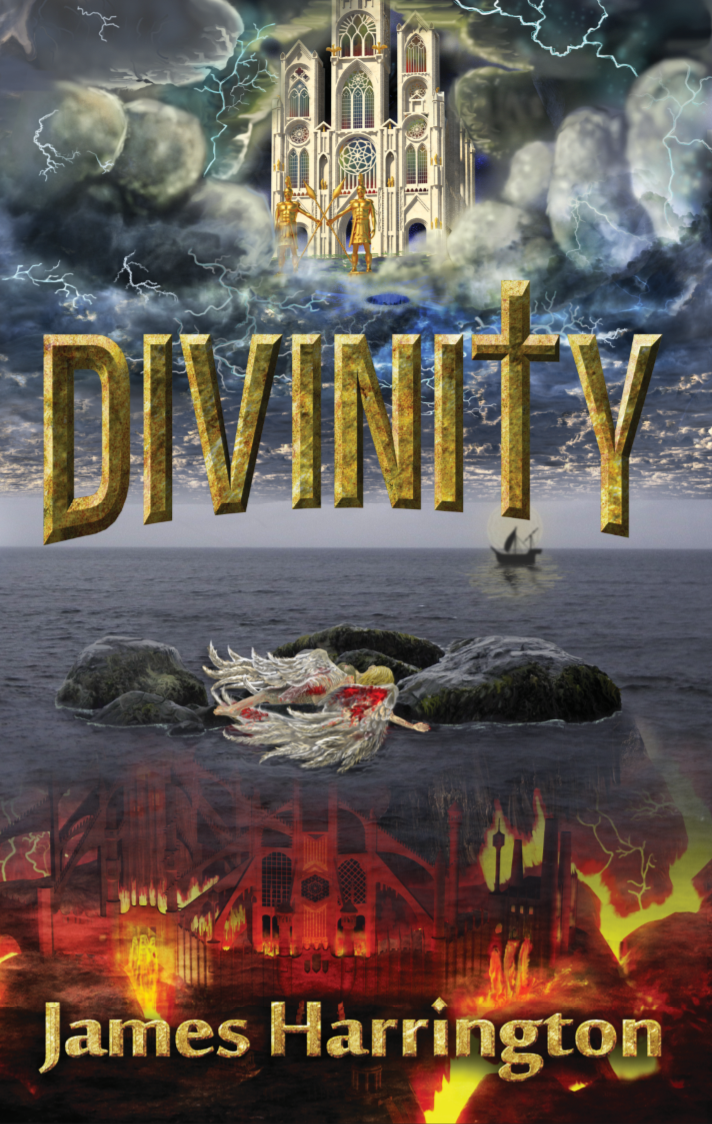
New Novel on the Way: Divinity!

Hi all, just wanted to let you know about an exciting new book that is due for release this November.

This was my first full length Novel and really was the pathway to writing Magnifica. After 8 years of rewrites and being put on the back-burner for Magnfica due to a lack of publishing interest, I revisited Divinity, rewrote it, and broke it up into an Epic story (several short stories culminating into one.) It is the longest story I’ve ever done.

Synopsis:

How could it come to this? Why would God let this happen to me? These were questions two very different souls in very different circumstances were forced to ask.
Giovanni was a poor fisherman living in 16th Century Venice. His entire family had been lost to the white plague. He suffered through their deaths only to discover that he too was infected with it. He is now alone and questioning his faith.
The angel, Adaline, was a hero of the Celestial War against Lucifer. All knew and admired her until she uncovered a plot to overthrow the Most High. In an attempted cover up, Adaline is betrayed and cast out of Heaven. She is sent to the mortal world to face torture and death at the hands of the creatures she most fears: humans.
Their worlds become intertwined when, by chance, Giovanni rescues her while out fishing. Injured and blind as the result of her expulsion, Adaline has little choice but to rely on this primitive creature for protection against the Church, Lucifer, and God’s own decree if she is to expose the true traitor and save all of existence.

This book is sort of a religious/mythological historical fantasy. I’m really excited about it and hope that everyone will give it a look and enjoy!

+

Love Never Dies: The Musical Review.

I try to stick to the positive… so if you read my blog for writing advice or new books to read, feel free to skip over this review. No one would blame you.

Phantom of the Opera was without a doubt the most awesome music I’ve ever seen! It had everything, action, romance, suspense. and horror. After seeing it at the Wang Theater in Boston Multiple times, my first being one of the early off-broadway casts, one has to wonder, how could anything ruin such a wonderful creation.

Well… Andrew Llyod Webber found a way…
To quote an angry video game critic ‘ya done f@#$ed it up, man!’

Ugh… have you ever watch/read a story that is so great you think that it’ll be a story told for years to come. Perhaps it’s a movie, a play, or a book, where once it’s over, the first words out of your mouth are “Oh wow, instant classic!”
You think the story is perfect. The character developement is complete, all the loose ends are tied up and when the story comes to a close, everything is as it should be. It’s a perfect story with a perfect ending…

Then they come out with a sequel. A totally unnecessary sequel to a story that had no loose ends or loopholes that contains forced plot contrivances, nonsensical character developments that were totally unnecessary and offensive to the senses, and… suddenly the perfect story becomes one you never want to waste your time with again, knowing how it was continued? (Lookin at you Jurassic Park!)

Well unfortunately this happened to me with the Phantom of the Opera. As I said, this was a story was perfect, it was like an old world tragedy dealing with a demented genius who had a love for the theater. He tutored a young singer and eventually fell in love with her. However he eventually falls victim to his own madness and as a result, his love is one that can never be. Angry, he strikes back and tries to force her to marry him. When she agrees, he realized the error of his ways and releases her. It is perfect. You leave the theater thinking, “Wow, that was awesome! Even if it was the 10th time I’ve seen it. Still awesome.”

For years I think since my first time seeing it in 4th Grade, I have loved this play. It was remastered and released in a movie format (NO NOT THE ACTUAL MOVIE) for it’s 25th Anniversary on DVD. The performers were awesome, and the sets and the costumes were beautiful… again… unlike the a fore mentioned theatrical release.

Well then something awful happened… Andrew Llyod Webber, the creative genius behind this masterpiece got greedy. He decided to write a sequel, set 10 years after the original story. According to him this would be a completely new story that, while featuring the old characters and set in the same world, would be completely different from the Phantom and could be viewed without having previously watched the Phantom itself… nice way to cut out your big money maker.
Apparently he didn’t try hard enough because not only does this show feature excerpts from the Phantom, but also partial musical scores. Heck the whole story references scenes from the Phantom! HOW IS THAT SUPPOSED TO WORK!?!?

The basic plot is this… the Phantom apparently didn’t just disappear into ghost form or die, which we all thought. No, he escaped to America where he… opened a freak show carnival. You know, the same kind that he apparently escaped from. UGH!!! Then for some unexplained reason Madam and Meg Giri (reoccurring characters in the Phantom of the Opera)  show up and begin working for the Phantom. Of course, by working, I mean prostituting themselves out to help pay for the carnival.
Meg, an up and coming dancer, and Madam Giri, a sophisticated ballet instructor who was clearly fearful of the phantom.
Again, for unexplained reasons, the Phantom now, 10 years later, launches a plan to lure the now-married Christine Daae to America to sing for him. He posses as a wealthy business man and sends her a letter asking her to come and sing. Well, at this point Christine is a famous opera singer with a 10 year old son and the Viscount, Raul… Yeah you remember, the hero of risked life and limb to save her in the Phantom of the Opera, the childhood friend who vowed to be there for her forever? Well now he’s is a no good drunken loser up to his eyeballs in debt and pretty much living off his wife. He apparently suspects that her son isn’t his and that she… still loves the Phantom… even though there really wasn’t any sign that she really loved the man who was manipulating her in the original play.

See this is what I mean when I say a forced sequel. You have essentially taken the hero, the man everyone looked up to, and needlessly, and unbelievably turned him into a slimy wretch who now will have to play the villainous role that he is totally ill-equipped for. Now it’s hard to watch the original because you know how this hero is going to turn out.

But wait, Andre Llyod isn’t done yet! No sir! Apparently Daae accepts the Phantom’s invitation, though completely oblivious as to who he really is. I’m not going to give everything away but let me put it this way, when she arrives, she is reunited with the Phantom, who makes a startling discovery… their son is a genius and has several qualities similar to the Phantom!!! Does that mean that maybe *gasp* HE’S ACTUALLY THE PHANTOM’S SON!?

Well Christine and the Phantom apparently think so, while Raul’s fears are coming true… Then Christine and the Phantom partake in a musical number about the magical night when their son was conceived. Wait a minute…. WHAT???? Go back and watch the Phantom! When the hell in the Phantom would she have had sex with the guy? When? When she had just met him in the dungeon at the beginning? I think not. After she saw his face? I doubt it since he wouldn’t go near her at that point! After Raul showed up? Unlikely. After he killed Boque? Hmmm… nope! So you’ve basically just created a massive plot hole in your original story!

Anyway, long story short. The Phantom uses his skills at manipulation to try to lure Christine back to him romantically. Raul in a drunken stupor bets the Phantom that he can convince her not to sing for him… the stakes? He loses Christine and their child if she sings. The Phantom pays off Raul’s debt if she doesn’t. Of course he agrees to this with full knowledge of the Phantom’s powers of manipulation. Who wouldn’t just gamble away their family? Also, the song the Devil Takes the Hindmost… really really stinks!
So at some point along the way, the Phantom reveals that he is going to leave everything to Christine’s son…. everything, meaning all the money Madam and Meg Giri worked… indecently to get for the Phantom. As you can imagine, they are not happy about it at all. Meg is especially bothered, mostly because she thought that the Phantom would love her, and it appears as though she has a psychotic episode.
Finally, the Phantom works his magic, Christine sings “Love Never Dies” and Raul leaves… yeah that’s it. He just leaves. No words, no pleading, no tearful goodbyes, he just leaves his wife and child behind! No, I’m serious, that’s it, he is never heard from again in this play!

The Phantom is beyond words happy as he has his love back. But wait, there is still one plot contrivance to go. In a fit of jealousy and anger, Meg appears with a gun and tries to shoot the Phantom. Of course she misses and hits Christine and… well that’s it really. Meg and Madam Giri don’t appear again. Anyway, in her dying moments she reveals that she still loves the Phantom and that she always has… you know, even though he lied to her, tricked her, manipulated her, almost killed her as well as the man she supposedly loved, senselessly murdered two people for no reason, and then disappeared for 10 years. She then turns to her son who is by her side and tells her the truth about who his father is. The play closes with her dying while the Phantom and his son stare at each other. At this point, the screen fades out.

My initial reaction was… WHAT THE HECK IS THIS CRAP!? You have essentially destroyed at least three characters from the original and punched multiple plot holes in the original story. Good God!

Naturally, you can imagine this travesty didn’t go over so well…
Ben Brantley of The New York Times gave it zero stars, calling the production “a big, gaudy new show. And he might as well have a “kick me” sign pasted to his backside… This poor sap of a show feels as eager to be walloped as a clown in a carnival dunking booth. Why bother, when from beginning to end, Love Never Dies is its very own spoiler.”
Quentin Letts of The Daily Mail gave the show a negative review, stating that it “is as slow to motor as a lawnmower at spring’s first cut”. He also criticized the show for lacking in storytelling and romance, stating that it “assumes that we understand the attraction these two dullards [Phantom and Raoul] have for the beautiful Christine. Could she do no better? … In the end you conclude that she simply seeks out suffering to improve her art.”
Susannah Clapp of The Observer was also critical of the book and called the show “drab” and “about as tension-filled as winding wool.” Even the musical numbers, she wrote, “never meld with the visual splendors, never give the effect, which is Lloyd Webber’s gift, of the music delivering the scenery.”
Sam Marlowe of Time Out London gave the show one out of five stars, calling it “ghastly” and “an interminable musical monstrosity”. He observes: “With its sickening swirls of video imagery, pointless plot, and protracted, repetitive songs, Love Never Dies … is punishingly wearisome.”
The show went through several rewrites and was postponed indefinitely from showing up on Broadway… yeah that’s right. A NY stage where plenty of crappy shows appear, was too good for Love Never Dies!

I would personally like to thank Andrew Llyod Webber. The wanton destruction of the beloved classic he gave us was quite extensive and complete! After watching the DVD release of this play on Youtube, I can safely say, I can never watch the Phantom again. All attempts at sitting through it have failed as I know what becomes of the characters after the curtain falls.

Road of Leaves- Free E-book this Weekend

Check out this new and exciting work by a talented author!

Eric Lorenzen's avatarEric Lorenzen

Road of Leaves cover

Get a free e-book this weekend.

For those who have not yet started my WAYS OF CAMELOT series, now is a good time to start. This weekend (Oct 17-19, 2014) Book 1 will be free on Amazon as an e-book.  ROAD OF LEAVES is an Arthurian fantasy for young adults and adults. This is a great chance to try out this series.

Check it out over at Amazon:

000006784

Magic, Mayhem, and Mystery

There are no simple roads to Camelot. Thomas is a 27-year-old magician’s apprentice who must travel to the Camelot guild house for his master. He takes the Road of Leaves, an enchanted tree-lined way that shifts every night as the winds move its leafy route. He joins a walking party that includes a monk, merchants, a troubadour, and an old woman.

Thom expects a pleasant hike along the Road that was crafted by the great wizard Merlin…

View original post 114 more words

+

The Villain

What is it about the villain that’s so great? Why do we like villains so much… to the point where we want to see the villain more than the hero?

Well originally, villains were just supposed to be a plot device. A simple element that was used to create a plot. There was no rhyme or reason to it. The villain was just a bad guy, there was very little back story or justification for it.

Over time, that changed. With crimes like those of Ted Bundy, Manson, and the Son of Sam killings, people started to become more interested in what made a villain tick. What made the Joker become the person with the white makeup? Why did the mad scientists and engineers that Superman fought do what they did? We established they that they were bad guy, but we never established why.

That’s when we started getting villains like Darth Vader, a tortured soul who became evil over years of conditioning and crippling fear of losing the ones he cared for most.
Other great villains would then follow. Suddenly stories were full of villains who were tortured during childhood, villains who were pushed into their crimes by their circumstances, villains who initially good guys but were betrayed by the actual good guys. Often, villains are villains because of a point of view. Many villains could actually be good guys if the narrator hadn’t already established who the ‘good guy’ was.

My personal favorites are the villains that are the most like the heroes, that want the same thing as the heroes but have different methods for achieving their goals. The X-Men have perfected this with Magneto. Some would call this the Anti-villain.

So why do we like these villains? Well I believe their story makes them more relateble, harder to hate because many people could see themselves become like them should the circumstances be right. How many could not see themselves coming to the same life conclusions as Magneto after living through such horror, only to see humanity make the same mistakes over and over again?

So does that mean that the plot device, static, villain no longer has a place? Well… to a point. If a story doesn’t have room for a largely dynamic villain in a story with multiple good guys and he’s just the device to bring them all together or influence their lives, then yes, a static villain has a place, but those types of villains are becoming rarer and rarer and eventually may go away. A good example of this type of villain still being used would be Lord of the Rings. Think about it, what is Sauron’s motivation for what he’s doing? Is that ever established in the move?

+

Can fictional stories be harmful?

Unfortunately, I have to say yes… hesitantly.

Fictional stories can absolutely be harmful if taken the wrong way or interpreted incorrectly.

A good example would be many of the Bible stories. The Bible was a good written by man for man. I can’t speak to who wrote the old testaments or how, but the new testament, at least as far as the Gospels are concerned, were written for different groups of people. This is why there are noticeably different from one another.

Is there historical truth in them? I’m sure there is, to a point. Like there was historical truth in Homer’s Iliad.  We know that Troy existed, we know that there was a war that destroyed the city, but were there Gods and immortals fighting there? Unlikely…

The Bible is similar in that while I do believe that Jesus existed as any good Christians do, I believe that he was crucified, and I believe that he rose from the grave, some of the stories may have been exaggerated or made up for the purposes of creating parables or lessons for people to live by. Keeping in mind that all of the canonical gospels were written well after the death of Christ and far beyond the life expectancy of his Apostles.

Yet knowing this, how many have been killed because of these stories? How many wars have been fought?
(Again, this is my personal opinion, I know that there are those out there who interpret the Bible as historical fact and I am well aware that I could be wrong.)

Another good example are the fairy tales that we know and love. Disney is a good example of this as they have recently been taking flak for altering the original stories and watering them down (Removing the Little Mermaid’s suicide, removing the part about Cinderella’s sisters  cutting their toes off… and don’t even get me started on Frozen…)

How do these harm us? Well…

For starters, I don’t believe in love at first sight and I don’t know very many people who do. Now you can call me glass half empty kind of guy, and maybe I am, but I prefer the term realist. Some of these stories paint a dangerous picture of how relationships are supposed to go. For one, painting women as an unequal part of the relationship, the damsel in distress, and the guy always being the one to save her is especially worrisome, and I’d like to illustrate why.

Guys and girls, we all suffer from a complex, more so than most of the previous generations, that may stem from some of these stories.

We here in the news all the time about a girl getting beaten by a guy, or fleeing for her life, and battered women shelters being overcrowded. Many people ask how they get themselves into those situations. Why do they go back to an abusive spouse or boyfriend. Why do they even give that guy the time of day to begin with?
Well, there are many reasons, most of them psychological, but also conditions like children or not being financially stable, but let’s focus on psychological for a moment.
In most cases, at least in my experience from the friends that I’ve had, the idea that he really is a good guy if you get to know him, or the idea that the woman thinks she can change the guy, or he wasn’t always like this, comes up a lot.

Most of the time when it comes to this, the girl sticks with him because she sees something there deep down that if she can bring out, will make the guy an upstanding person. The ability to see something in someone or something that no one else sees is a wonderful gift, but it can also be a very dangerous one at that. The reality is that most people can’t be changed, even if they want to. Nature is a hard adversary to combat.

This is one of those areas that some… albeit less thoughtful people will say that the woman brought it on themselves that they should have known better. Well maybe, if they saw it at the beginning, then they should have run the other way and quickly. However, if they didn’t see it, then it’s a lot harder to get out of once you’re already knee-deep or beyond. Again, the fairy tale goggles come into play here too in that they may see the man inside the beast. (Beauty and the Beast Reference.)

Guys, we are not immune to this. We’re not. Where women go for the bad boy in order to try and change him… we do the same thing, but in a different way.
Many girls, even if they don’t realize it see themselves as Bell and that guy as the beast.  Guys, we see ourselves as Prince Charming. Laugh all you want, whether you realize it or not, it’s true. Where girls go for the asshole, guys go for the… for lack of a better term, the girl who has been damaged in some way.

It’s always the same story over and over, a guy meets a girl, get’s to know her, finds out that she has either a troubled past, cruel or abusive parents, or some psychological issues. Does that make us go running? Should it? Well that depends. Unfortunately for many guys, on some level, we see ourselves as the hero who is going to be the turning point in that person’s life and we start trying to build said person up and try to restore confidence, break the hold a bad parent has over them, or try to help them overcome a psychological issue. The result in too many cases is that the guy who is trying to be the hero, the guy who is trying to help, eventually in the eyes of the girl, becomes part of the problem. The end result is that the girl takes the new-found confidence or strength and using it against the very person who tried to help. Thus pushing that person away and sending the girl back to the downward spiral such as the abusive party that they were trying to break free of.
In the end, you’ve got the opposite of the desired effect, and both parties comes away damaged.

Now, does this mean that the damaged girl or the bad boy are unworthy of compassion and love? No, absolutely not. What it means is that the person who chooses to be with them can not try to change them. Help them, but don’t push them into it. Accept them as they are and go from there. It’s unfortunate, but it is the reality. You can’t change a guy and Prince Charming doesn’t exist.

So that’s it, now are fairy tales 100% to blame for this? No of course not, nature, nurture, and… yeah in some cases, stupidity also play an affect, but that doesn’t mean that the stories we tell our children shouldn’t be examined en mas to see what kind of damage that they could be doing.

Anyway, leave a comment, let me know if you think I’m right or if I’m way off!

Catch you on the flip side!

-Jim

+

Question: Did Mithrandir (Gandalf) and Galadriel have a relationship at one point?

In my opinion… YES!

Though there really isn’t any evidence of it in any of the books. The movies make it more than apparent.

There is no doubt about it. It’s not really apparent in Lord of the Rings although the look on Galadriel’s face is of concern when she discovers that Gandalf has fallen.

Not only that, but the way they react to each other during the White Council (especially when he first sees her) is even more evidence.

But really, the only proof I needed is this video:

https://www.youtube.com/watch?v=fZZloOPRnQ8

Now, is it possible that I’m thinking too much into this? Yes.
Could they have just been really close friends? Absolutely, but I don’t buy it.

Let me know what you think. Am I right or wrong?

Does a book becoming a movie ruin the book?

The answer SHOULD BE a resounding NO!

If Magnifica or Divinity were ever made into a movie and it stunk… my book would still be sitting on the shelf, available to read. The movie will have done nothing to it.

That said, if a book was turned into a movie and the movie turned out to be better than the book (happens, though rarely), then it  could lead to disappointment in the story.